Systemic collaboration between companies and social enterprises is built through various mechanisms – from social procurement and commercial partnerships, to donations and in-kind contributions of products and services, as well as joint product development, mentoring and expert support, and grants and investments for growth.
Through these types of collaboration models, initiatives with tangible and measurable impact on society and the environment emerge. Below, we present two examples of collaboration between companies and social enterprises in Serbia that demonstrate the value of such partnerships.
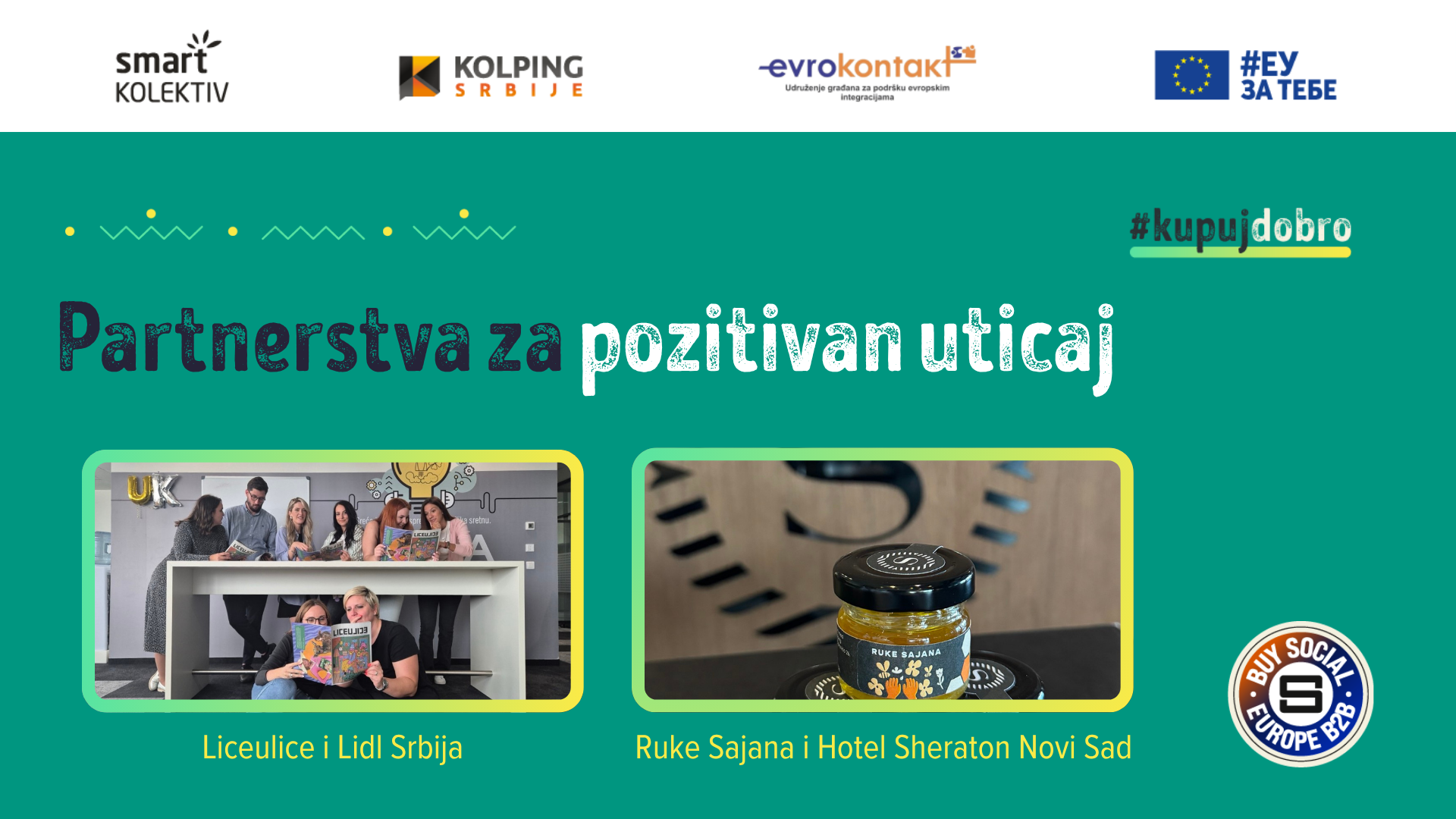
Liceulice & Lidl Serbia
The collaboration between the social enterprise Liceulice and Lidl Serbia has, over the past three years, demonstrated how shared values create concrete, measurable, and long-term social impact. The partnership includes an annual subscription of approximately 500 magazine copies, paid PR content, and regular donations of essential goods to vendors, with a total value to date of around RSD 2 million, as well as visibility in a magazine with a circulation of 13,000 copies.
Impact achieved:
- 140 vendors across 4 cities receive packages worth RSD 16,000
- opportunities for dignified work and stable income for people in vulnerable situations
- increased awareness of important social issues
- strengthened sustainability of the social enterprise and enhanced positive impact
- support for an independent media outlet
Ruke Sajana & Sheraton Novi Sad
The partnership between the social enterprise Ruke Sajana and Sheraton Novi Sad hotel represents an example of social procurement that creates positive impact for people, the community, and the environment. Their collaboration began in spring 2025, when Sheraton Novi Sad, part of the Marriott International group, introduced honey produced by Ruke Sajana into its offer. In addition to the meadow honey becoming part of the hotel’s supply chain, the partnership has been further expanded through joint participation in relevant events.
Impact achieved:
- employment and empowerment of women from rural areas
- environmental protection through sustainable beekeeping and biodiversity preservation
- promotion of local and sustainable products in the tourism sector
These two examples show that when developed strategically and continuously, partnerships between companies and social enterprises become an important mechanism for building a more inclusive and sustainable society.
The “Buy Social” campaign promotes collaboration between companies and impact-driven enterprises and is part of the project “Resilient Communities: Nurturing Social Enterprises for Local Development” implemented by Smart Kolektiv in partnership with Evrokontakt Kruševac and the Kolping Society of Serbia, with the financial support of the European Union. Buy Social Europe B2B is a transnational initiative that empowers social and mainstream enterprises to connect and build sustainable trade partnerships. The initiative unites 23 partners from 17 countries, including Smart Kolektiv.
The content of this text does not necessarily reflect the views of the European Union.