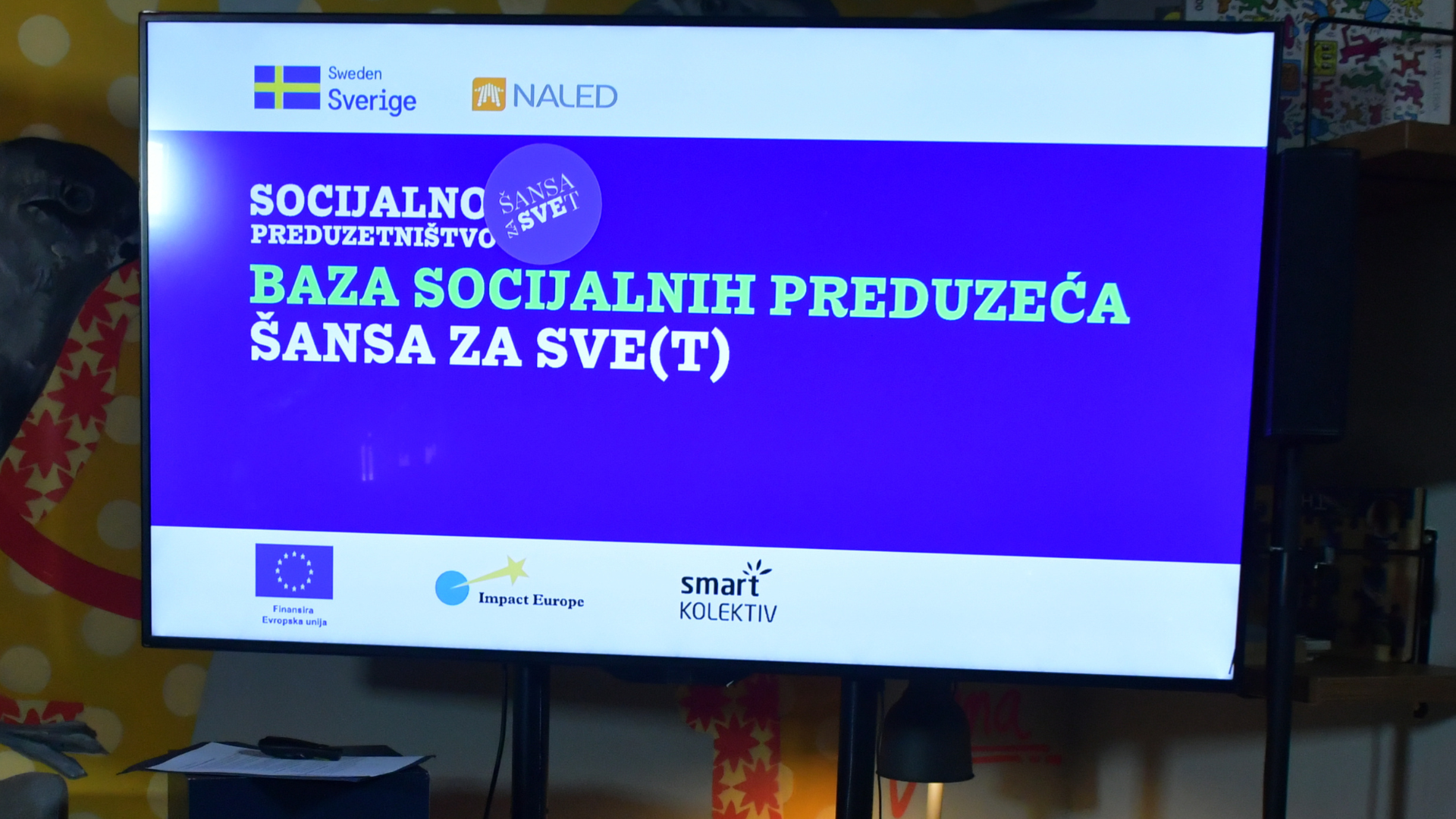
Belgrade, 2 September 2026 – More than 75 social enterprises, vocational rehabilitation enterprises and social impact businesses from 25 cities and municipalities are featured in the first Database of Social Enterprises in Serbia. The database was created to increase their visibility and make it easier for them to connect with citizens, companies, the public sector and donors, NALED and Smart Kolektiv announced today.
Available at socijalnapreduzeca.rs, the database brings together, for the first time, information on what social enterprises do, the products and services they offer, where they operate and what social impact they create. All organisations and businesses operating according to the principles of the social economy can apply to be included in the database.
“The visibility provided by the database should be the starting point for more concrete support, from tailored financing and mentoring to easier access to markets and inclusion in supply chains and public procurement. Our ambition is for these enterprises to no longer depend solely on the enthusiasm of individuals, but to have systemic support, stable operations and an equal place in the economy,” said Violeta Jovanović, Executive Director of NALED.
Social enterprises operate in the market like other businesses, but in addition to their business objectives, they have a clear social mission. For example, they may employ persons with disabilities while producing food products, or engage women from rural areas in making handicrafts, thereby providing them with income and economic independence. At the launch event, the enterprises Zvuci srca, Radanska ruža and Centar Zvezda presented their work, while catering was provided by Naša kuća. The event was held at Kafe bar 16.
“Kafe bar 16 shows that young people who have grown up in difficult life circumstances need to be given the opportunity to learn, work and become independent. These are young people living in challenging circumstances. This is a place where they feel free and safe, and where they have the opportunity to earn an income and build an independent life,” said Jasna Bratičević, Employment Support Programme Coordinator at the Centre for Youth Integration.
In addition to social enterprises, the database also includes vocational rehabilitation and employment enterprises for persons with disabilities, as well as social impact businesses, with each entity clearly identified by category. The database is informational in nature and does not constitute an official register. Participation is voluntary, and enterprises provide information about their operations themselves.
“The database will help us assess the sector’s potential to integrate people from the most difficult-to-employ groups into the labour market. Regardless of the number of formally registered entities, the strength and importance of the sector should be measured by its ability to provide people who need support the most with opportunities for decent work, economic independence and equal participation in society. The database provides a more realistic picture of the sector and can serve as a basis for developing targeted support measures,” explained Irena Đorđević Šušić, Head of the Entrepreneurship Unit at NALED.
“The latest research by Impact Europe shows that, in addition to financial support, social enterprises need mentoring, networking and greater visibility. This is why the database is important for better showcasing these enterprises and opening up business opportunities,” said Željko Mitkovski, Project Manager at Smart Kolektiv, reminding that social enterprises and social impact businesses can apply by 30 September to the public call launched by Smart Kolektiv for grants ranging from EUR 15,000 to EUR 22,500.
The database was developed through the project “More Efficient Public Procurement and Sustainable Supply Chains (ESG) for Improved Competitiveness,” implemented by NALED with the support of the Government of the Kingdom of Sweden. It was presented in cooperation with the “Invest for Change” project, funded by the European Union and implemented by Impact Europe together with Smart Kolektiv and partners from the Western Balkans.