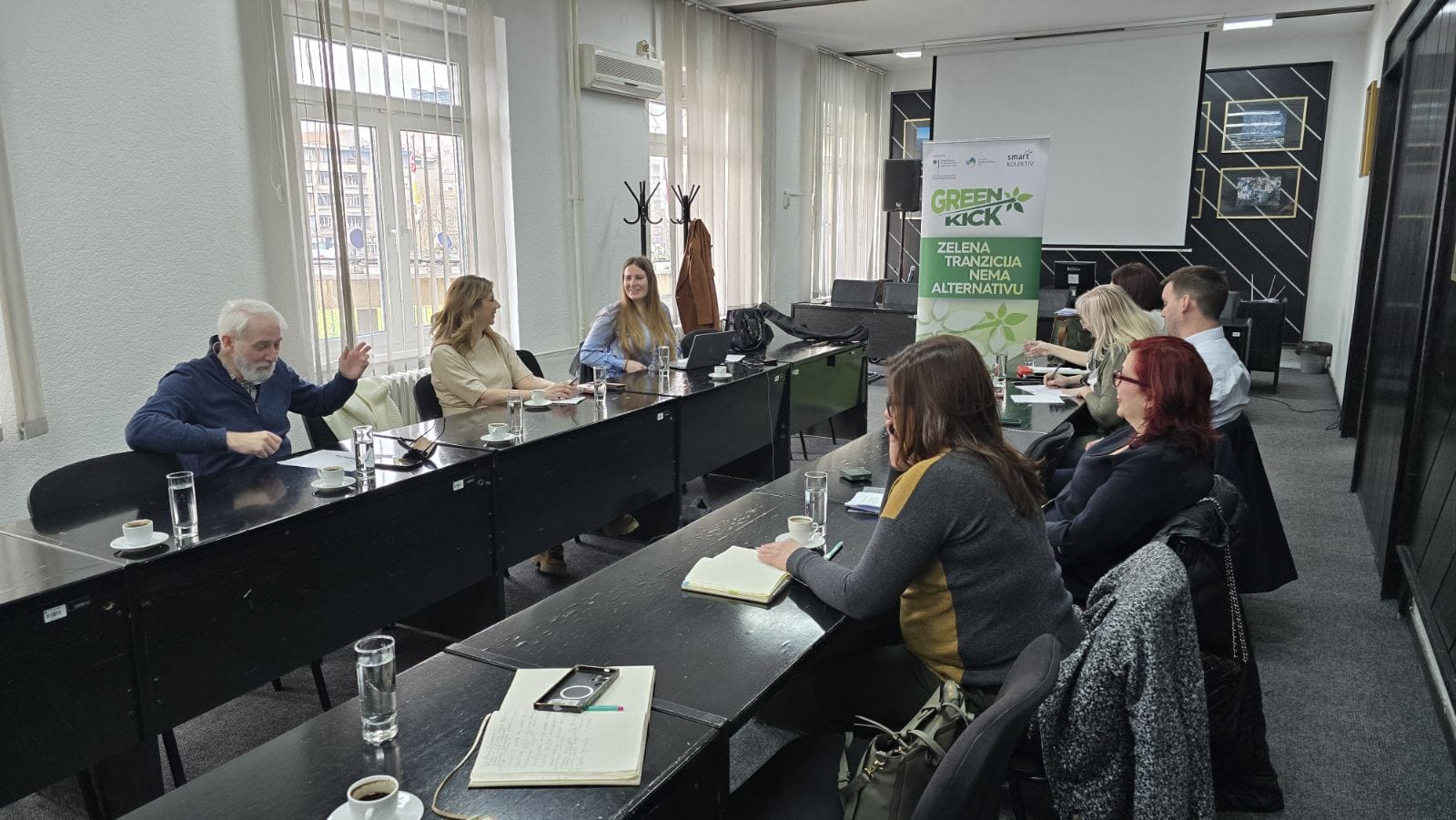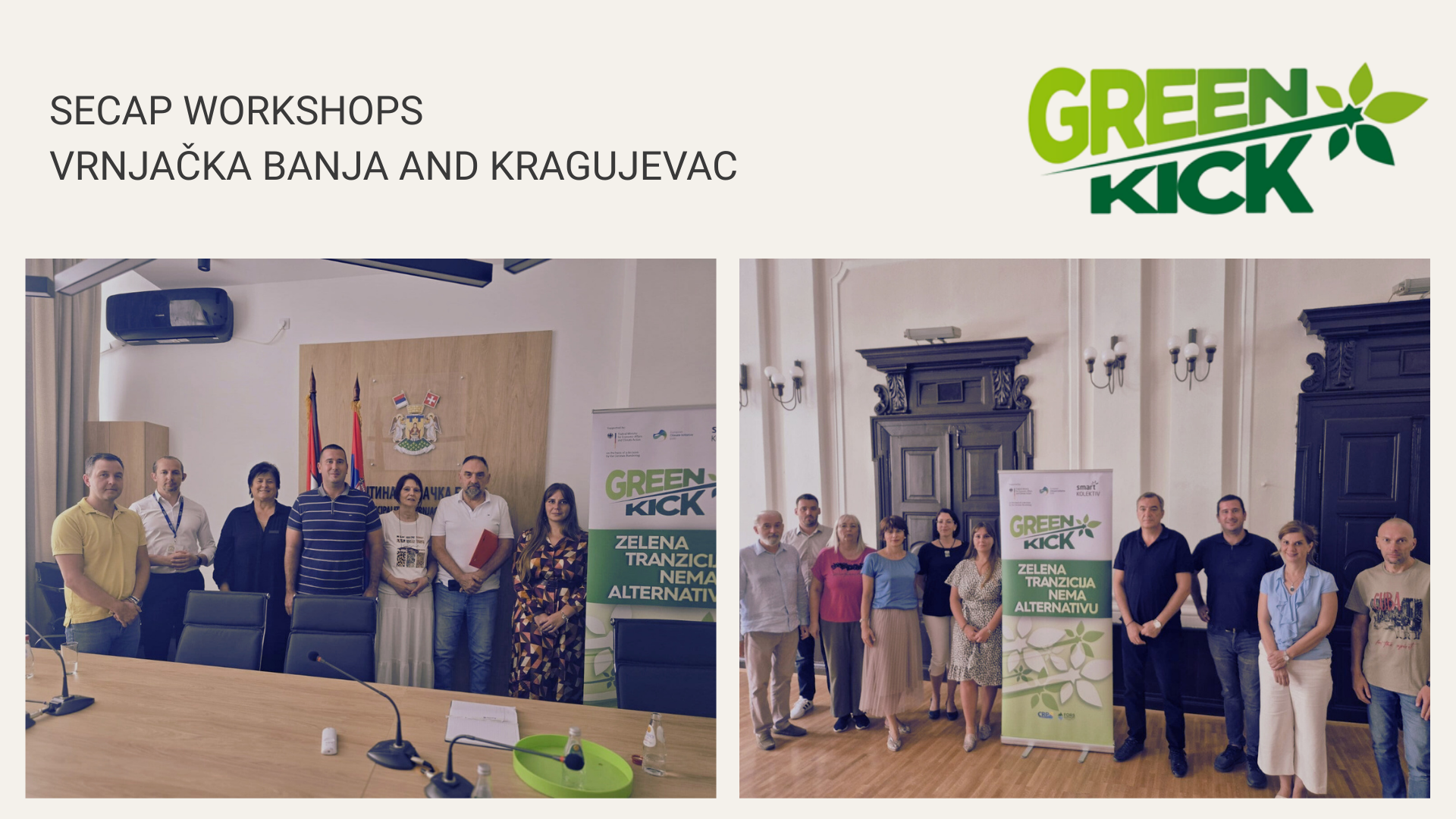
September 3, 2025 – New SECAP workshops were organized in Kragujevac and Vrnjačka Banja with representatives of local governments, civil society organizations, and other relevant stakeholders. The focus was on exchanging knowledge and experiences on how cities and municipalities can strengthen their resilience to the impacts of climate change through risk and vulnerability analysis.
The workshops took place on August 29 in Kragujevac and on September 2 in Vrnjačka Banja, continuing a series of successful meetings previously held in Šid, Novi Pazar, and Smederevska Palanka. Special emphasis was placed on the role of the Sustainable Energy and Climate Action Plan (SECAP) as a strategic document providing the foundation for planning and implementing climate adaptation measures.
During the working sessions, participants identified the most significant climate threats, analyzed the vulnerability of sectors such as health, agriculture, tourism, and transport, and discussed the situation of particularly sensitive social groups. They also explored concrete measures that can contribute to better preparedness of local communities and more effective responses to extreme climate events.
The workshops concluded with a summary of key findings, underlining the importance of continuous cooperation between local governments, the civil sector, and other partners as a prerequisite for the successful implementation of local climate and energy policies.
The “Green Kick” project supports local governments in Serbia in the process of decarbonization and the development of sustainable energy systems. It is implemented by Center for Development and Support from Bosnia and Herzegovina in partnership with the Smart Kolektiv from Serbia and the Foundation for the Development of Northern Montenegro – FORS Montenegro. The project is part of the European Climate Initiative (EUKI), supported by the German Federal Ministry for Economic Affairs and Climate Action (BMWK).