After six intensive lectures within the Responsible Business Forum’s Sustainability Starter program, young participants worked on Sustainability Challenges assigned by their mentors and will present their solutions at the CSR & ESG Forum on December 4.
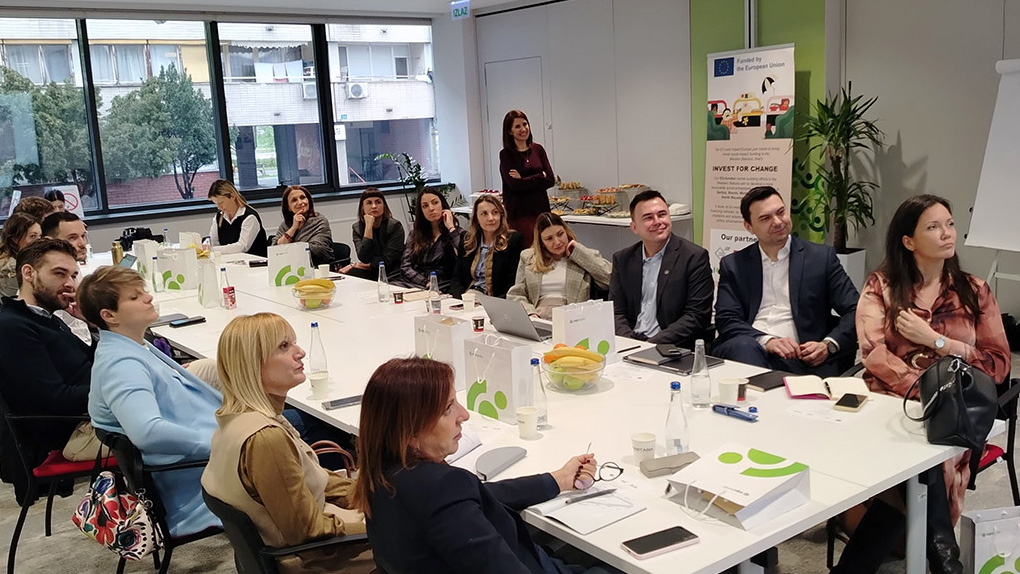
Over two weeks, divided into two working groups, the Starters worked on real-world challenges with mentoring support. The goal was to apply theoretical knowledge in sustainability, ESG standards, corporate strategy, and social impact through concrete tasks simulating situations that companies and organizations encounter daily.
The first group worked on a case study for Wave Electronics, a company facing regulatory pressures, market expectations, and the need for a more sustainable business transformation. Participants identified material ESG topics using double materiality principles, drafted an ESG strategy, and proposed directions for transforming the business model through circular and regenerative approaches. This task allowed them to understand how ESG is structured in the manufacturing industry and how sustainability influences strategic planning, innovation, and long-term business resilience.
The second group worked on a challenge from the social enterprise Nova šansa Catering, which employs young people leaving the social protection system. Participants assumed the role of a business development team, analyzed potential B2B clients with a strong ESG focus, selected the most relevant companies, and prepared materials for initial meetings. This task gave them insight into practical processes of connecting the corporate sector and social enterprises, developing offerings, understanding the market, and creating initiatives that are both socially beneficial and commercially sustainable.
This part of the program represents a key step in preparing young people to understand the practical role of sustainability in modern business and contributes to building a new generation of professionals in this field.
The theoretical part of the program consisted of six webinars that preceded the work on the challenges.
The first webinar, delivered by Neven Marinović, opened the program with the topic of sustainable careers and explained why sustainability has become an essential professional issue for young people. Participants learned how global trends shape the labor market and how responsible companies create new opportunities for emerging professionals.
The second webinar, led by Svetlana Damnjanović, focused on understanding sustainability, the difference between CSR and ESG approaches, and how companies align their economic goals with social and environmental impact. Special attention was given to challenges such as greenwashing and the idea that ESG is not merely a compliance requirement, but an opportunity for innovation and growth.
The third webinar, held by Mina Radović and Milica Maslarević from Nestlé Serbia, provided concrete insights into building a sustainability career within a large international company. Participants had the opportunity to learn about Nestlé’s sustainability team, current projects, and the competencies most essential for entering this field today.
The fourth webinar, delivered by Margareta Musić from Elixir Group, focused on the green agenda and the role of companies in developing local communities. Numerous company projects were presented—from investments in renewable energy to support for education, sports, and environmental protection—accompanied by a discussion of the opportunities and challenges within the sustainable industry.
The fifth webinar, led by Neda Stanković from Smart Kolektiv, focused on sustainable financing models and how organizations and social enterprises can ensure long-term stability. Participants learned about grants, donations, crowdfunding, and impact investments, as well as building partnerships that support sustainable development.
The final webinar, delivered by Jovana Važić from Bambi, explored strategic investment in people and communities. Participants learned how such investments impact employee development, company reputation, and opportunities for young people aspiring to build careers in ESG, illustrated through examples of green initiatives and collaboration with local communities.
Through both the theoretical and practical parts of the program, participants were able to connect knowledge and experience, strengthen teamwork, research, and presentation skills, and gain first-hand insight into how ESG strategies and sustainable business models are developed.